
Men's Vitality & Performance
Zinc and Magnesium for Testosterone: What the Evidence Really Says
Zinc and magnesium are the two minerals most often linked to testosterone. The honest answer: they matter most when you are low. Here is how to tell, how much to take and where to get them.
By The VitoAid Wellness Team · September 25, 2026 · 8 min read
Quick answer
What this means for your routine
Zinc and magnesium are the two minerals most often linked to testosterone. The honest answer: they matter most when you are low. Here is how to tell, how much to take and where to get them.
A relevant option from VitoAid
Compare the complete formula, daily serving and current purchase options before you decide.
See Testo BoostX detailsReview the full label, directions, pricing and purchase options before ordering.

In this guide
Search "zinc and magnesium for testosterone" and you will find big promises. The research is more modest — but also more useful. Both minerals have a genuine role in normal testosterone production and muscle function. Correcting a shortfall can help; taking more than you need does not keep pushing levels higher.
Why zinc matters for men
Zinc is involved in hundreds of enzymes, including those used to make testosterone. Studies in men with low zinc status have shown that restoring zinc supports normal testosterone levels. Studies in men who already get enough zinc generally show little extra effect.
Magnesium and testosterone
Magnesium supports muscle contraction, energy production and sleep quality. Some studies found higher free testosterone in athletes and older men who supplemented magnesium, especially when their intake was low. Many adults fall short of the recommended amount, which is why magnesium is common in men's formulas.
Do zinc and magnesium increase testosterone?
| Your situation | Zinc | Magnesium |
|---|---|---|
| Low intake or deficient | Likely helps support normal levels | Likely helps, especially with training |
| Already getting enough | Little extra effect | Little extra effect on hormones; may help sleep |
| Heavy sweating / intense training | Higher needs, worth checking | Higher needs, worth checking |
How much do you need?
- Zinc: adult men need about 11 mg per day. The upper limit from all sources is 40 mg per day — long-term high doses can lower copper levels.
- Magnesium: adult men need about 400–420 mg per day from food. The upper limit for supplemental magnesium is 350 mg per day; more can cause loose stools.
- Take zinc with food if it upsets your stomach, and separate it from iron or calcium supplements by a couple of hours.
Best food sources
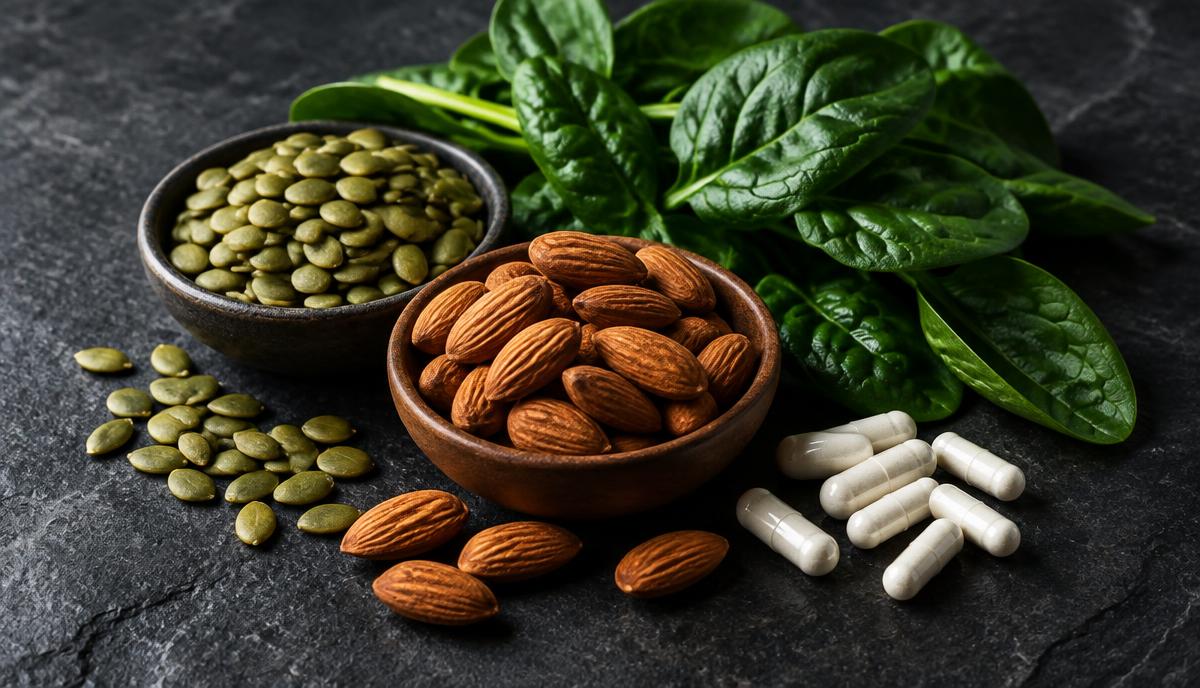
- Zinc: oysters, beef, crab, pumpkin seeds, chickpeas, cashews.
- Magnesium: pumpkin seeds, almonds, spinach, black beans, dark chocolate, whole grains.
Who should skip this
- People with kidney disease should not take magnesium supplements without medical advice.
- Zinc can interact with some antibiotics and with penicillamine; check with your pharmacist.
- Don't double up: if your multivitamin already contains zinc, count it toward the 40 mg limit.
Cost per day
Testo BoostX includes zinc and magnesium alongside seven plant ingredients for about $1.30 per day (1 bottle, $39), $1.17 per day (3 bottles, $105) or $1.00 per day (6 bottles, $180).
Sources & editorial notes
This guide is written by VitoAid, which sells the products featured. Nutrient references explain established nutritional roles, not clinical results for any finished formula.
- NIH ODS — Zinc
Zinc functions, intake recommendations and upper limits.
- NIH ODS — Magnesium
Magnesium functions and recommended intakes.
- VitoAid — Testo BoostX
Current label, directions and offers.
Frequently asked questions
Does zinc and magnesium increase testosterone?
They support normal testosterone production, and correcting a deficiency can help. In men who already get enough, extra zinc and magnesium show little additional effect.
How much zinc should a man take for testosterone?
Adult men need about 11 mg per day. Stay under 40 mg per day from all sources, because long-term high doses can cause copper deficiency.
Is it better to take zinc and magnesium at night?
Magnesium is often taken in the evening because of its role in relaxation and sleep. Zinc can be taken any time with food. Consistency matters more than timing.
Can I get enough from food?
Many men can, with regular meat, seafood, seeds, nuts, beans and leafy greens. Supplements are most useful when your diet falls short or you train and sweat heavily.
