
Men's Vitality & Performance
What Does Zinc Do for Men?
One of the few men's supplements with a genuinely boring, well-established job description — and one of the easiest to get wrong in both directions.
By The VitoAid Wellness Team · September 22, 2026 · 8 min read
Quick answer
What this means for your routine
One of the few men's supplements with a genuinely boring, well-established job description — and one of the easiest to get wrong in both directions.
A relevant option from VitoAid
Compare the complete formula, daily serving and current purchase options before you decide.
See Testo BoostX detailsReview the full label, directions, pricing and purchase options before ordering.

In this guide
Zinc is an essential mineral, which means your body cannot make it and you have to eat it. It is involved in hundreds of enzyme reactions, and a handful of its established roles matter a lot to men: normal testosterone levels in the blood, normal fertility and reproduction, normal immune function, and protein synthesis. No hype needed — those are the authorised, well-established functions.
What zinc actually does
- Contributes to the maintenance of normal testosterone levels in the blood.
- Contributes to normal fertility and reproduction.
- Contributes to the normal function of the immune system.
- Contributes to normal protein synthesis and the maintenance of normal bones.
- Contributes to normal cognitive function and to the protection of cells from oxidative stress.
- Contributes to the maintenance of normal skin, hair and nails.
Signs your intake may be low
- Getting sick more often than usual, or slow recovery from minor illness.
- Wounds and small cuts healing slowly.
- Reduced appetite or a dulled sense of taste and smell.
- Hair thinning and brittle nails.
- Persistent fatigue and poor training recovery.
These are non-specific — they can mean many things. Men who sweat heavily in training, eat mostly plant-based, drink heavily, or have digestive conditions affecting absorption are the groups most likely to fall short. Blood testing is the only way to know.
How much per day
| Figure | Amount | Meaning |
|---|---|---|
| Recommended daily intake | About 11 mg | The target from food and supplements combined |
| Typical supplement serving | 10–25 mg | What you will see on most men's labels |
| Upper limit for adults | 40 mg per day | Do not exceed long term without medical supervision |
Food first: the best sources
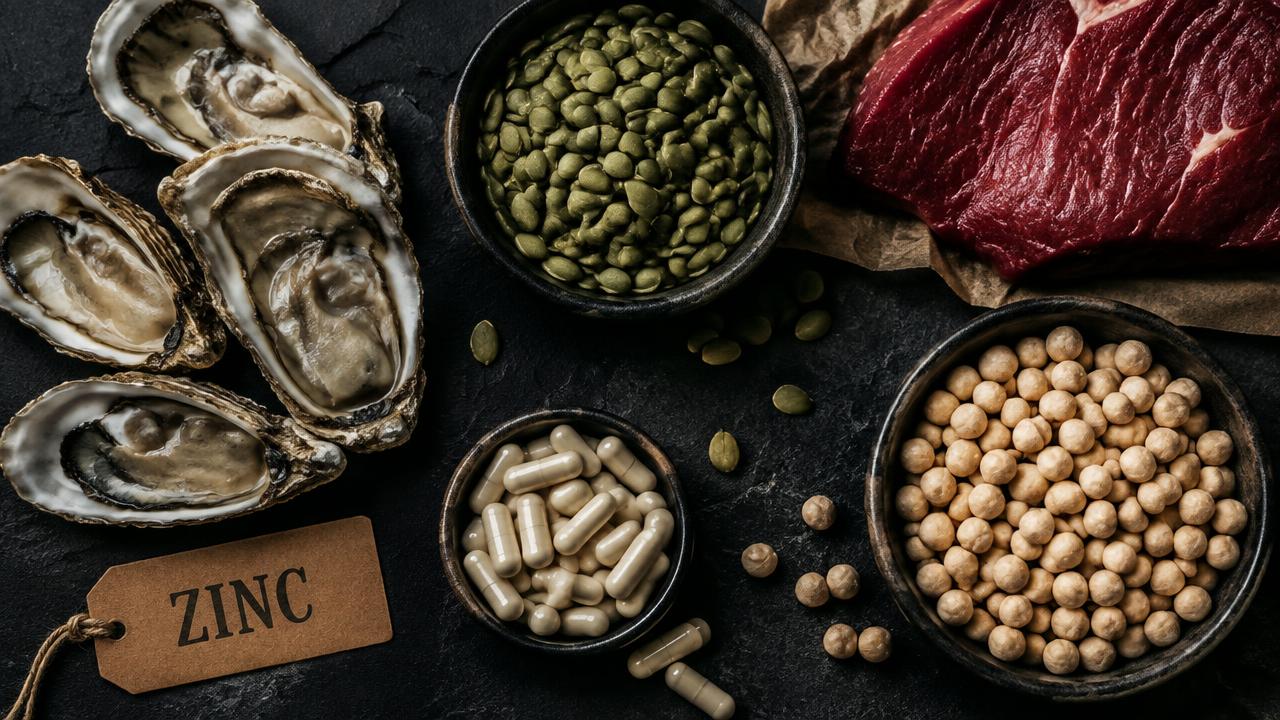
- Oysters — by a very long margin the richest source there is.
- Beef, lamb and pork.
- Crab, lobster and other shellfish.
- Pumpkin seeds, hemp seeds and cashews.
- Chickpeas, lentils and beans — soaking helps absorption.
- Cheese, yoghurt and eggs.
Plant sources contain phytates, which reduce absorption, so men eating mostly plant-based typically need more than the headline number.
What too much zinc does
This is the part men skip. Sustained high-dose zinc interferes with copper absorption, which over time can cause anaemia and neurological problems. Short-term, large doses cause nausea, cramps and a metallic taste. Zinc also interacts with some antibiotics and with diuretics. More is not better — the goal is sufficiency, not saturation.
How to take it
- 1With food, to avoid nausea. Avoid taking it on an empty stomach.
- 2Separate it from calcium and iron supplements by a couple of hours.
- 3Do not stack a standalone zinc supplement on top of a multivitamin and a men's formula that both already contain it — add up your total.
- 4Zinc picolinate, citrate and gluconate are all well absorbed; the form matters less than the total.
- 5If you take antibiotics or diuretics, ask a pharmacist about timing.
Frequently asked questions
What does zinc do for men?
Zinc contributes to the maintenance of normal testosterone levels in the blood, normal fertility and reproduction, normal immune function, protein synthesis, and the maintenance of normal skin, hair and nails.
Does zinc increase testosterone?
Zinc helps maintain normal testosterone levels. Correcting a low intake can matter; taking extra zinc when your intake is already adequate does not push levels above normal.
How much zinc should a man take per day?
The recommended intake for adult men is around 11 mg per day from food and supplements combined. Most supplements provide 10–25 mg, and the upper limit for adults is 40 mg per day.
What are the signs of low zinc in men?
Frequent illness, slow wound healing, reduced appetite, a dulled sense of taste or smell, hair thinning and poor recovery. These signs are non-specific, so a blood test is the only way to confirm it.
Can you take too much zinc?
Yes. Sustained high doses interfere with copper absorption and can cause anaemia and neurological problems, and large single doses cause nausea and cramps. Stay within the label amount unless a doctor advises otherwise.

