
Blood Flow & Circulation
L-Citrulline Supplement: What It Does, Doses and How to Take It
Citrulline is the amino acid behind most modern blood flow and pump formulas. Here is what it does, how much to take and when — without the hype.
By The VitoAid Wellness Team · September 19, 2026 · 7 min read
Quick answer
What this means for your routine
Citrulline is the amino acid behind most modern blood flow and pump formulas. Here is what it does, how much to take and when — without the hype.
A relevant option from VitoAid
A practical next step for men comparing daily vitality, drive and stamina formulas.
See Max Boost detailsReview the full label, directions, pricing and purchase options before ordering.

In this guide
Walk down any pre-workout or circulation aisle and one amino acid keeps appearing: L-citrulline. It earned that shelf space honestly — it is one of the few ingredients with both research interest and a genuine reason to exist separately from its better-known cousin, L-arginine.
This guide covers what L-citrulline actually does in the body, why it is often chosen over arginine, the doses you will see on quality labels, timing, and the safety notes worth knowing.
What L-citrulline actually does
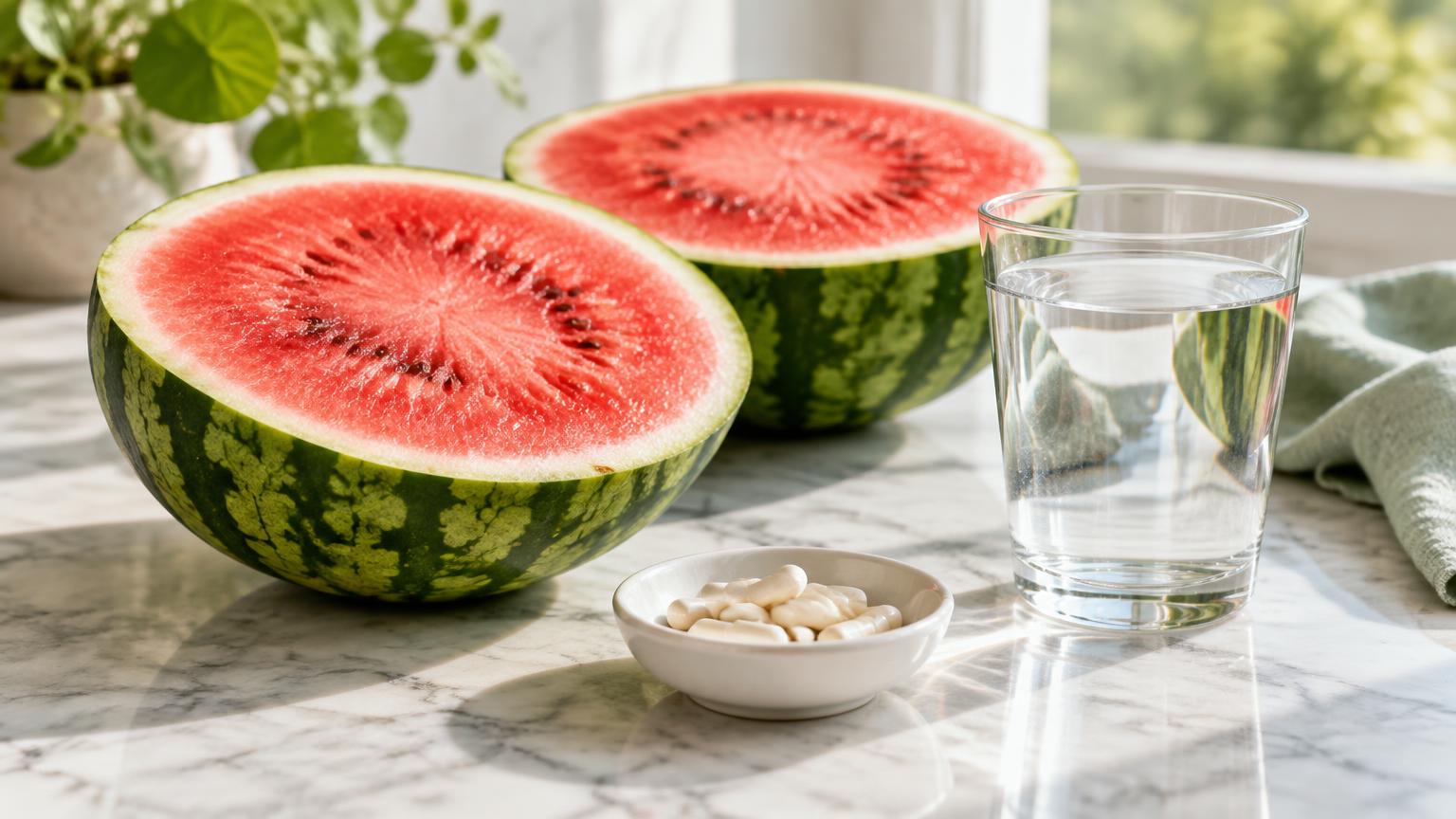
Citrulline is an amino acid named after the watermelon it was first isolated from. Your body converts it into L-arginine in the kidneys, and arginine is the raw material for nitric oxide — the signalling molecule that tells blood vessels to relax and widen. More nitric oxide means better blood delivery to muscles and organs.
- It supports the body's own nitric oxide production rather than forcing it.
- It bypasses the gut and liver breakdown that limits how much arginine survives when taken directly.
- It is popular pre-workout for the pump and workout endurance, and daily for general circulation support.
Citrulline vs L-arginine: which one?
Arginine is the direct precursor to nitric oxide, but when you swallow it, much of it is metabolised by the gut and liver before it can circulate. Citrulline skips that bottleneck — it is absorbed intact and converted to arginine steadily inside the body, raising arginine levels more effectively than taking arginine itself. That is why most modern formulas lead with citrulline and either skip arginine or use both.
How much citrulline to take
- General circulation support: capsules commonly provide 1,000–3,000 mg per day, taken with food.
- Pre-workout pump support: studies on citrulline malate use 6–8 g taken 40–60 minutes before training; capsules usually sit in the 1–3 g range.
- Consistency beats size: a moderate daily amount taken every day outperforms an occasional large dose.
- Stay hydrated — nitric oxide support works best when blood volume is not running low.
When to take it
For training support, take it 40–60 minutes before your session. For general circulation support, the timing matters less than the consistency — take it at the same time each day, with or without food, and judge it over weeks rather than days. Watermelon is the richest natural source, which is why it shows up in circulation-focused diets alongside leafy greens and beets.
What results to expect — and when
- First sessions: some users notice better pumps and slightly better workout endurance within the first week or two.
- Weeks 3–8: daily-takers most often report steadier energy and better recovery rather than a dramatic single-day change.
- Reality check: citrulline supports a system — sleep, training and diet still set the ceiling. No amino acid overrides them.
Safety, side effects and interactions
L-citrulline is generally well tolerated at label doses; the most common complaints at high intakes are mild digestive discomfort. Speak to your doctor before taking citrulline if you take blood pressure medication, blood thinners, nitrates, or medication for erectile dysfunction — supporting nitric oxide can compound with these. It is intended for healthy adults over 18, and it is not suitable during pregnancy or breastfeeding. Stop use and consult a professional if you experience an adverse reaction.
Citrulline forms compared
| Form | Typical dose | Notes |
|---|---|---|
| L-citrulline (pure) | 3–6 g | Best value per gram of actual citrulline |
| Citrulline malate 2:1 | 6–8 g | About two-thirds citrulline, one-third malic acid |
| Citrulline in a blend | Per label | Check the amount is disclosed, not hidden in a blend |
What it costs per day
| Supply | Price | Cost per day |
|---|---|---|
| 1 bottle (30 days) | $69 | about $2.30 |
| 3 bottles (90 days) | $147 | about $1.63 |
| 6 bottles (180 days) | $210 | about $1.17 |
Who should skip this
- Anyone on blood pressure medication or nitrates without medical advice
- Men who want a stimulant effect — citrulline is not a stimulant
- Anyone unwilling to take it consistently; occasional use tells you nothing
Frequently asked questions
What does an L-citrulline supplement do?
It supplies the amino acid your body converts into L-arginine, which is the raw material for nitric oxide — the molecule that relaxes and widens blood vessels. Users take it for circulation support, better workout pumps and recovery.
How much L-citrulline should I take per day?
Daily circulation capsules commonly provide 1,000–3,000 mg. Pre-workout studies on citrulline malate use 6–8 g taken 40–60 minutes before training. Follow your product's label and stay consistent.
Is citrulline better than arginine?
For raising arginine levels in the body, yes — citrulline avoids the gut and liver breakdown that destroys much of a direct arginine dose, so it raises circulating arginine more effectively.
When should I take L-citrulline?
For workouts, 40–60 minutes before training. For general support, the same time each day matters more than the specific time — consistency is what drives results over weeks.
Are there side effects of citrulline?
It is generally well tolerated; mild digestive discomfort is possible at high doses. Check with your doctor first if you take blood pressure medication, blood thinners, nitrates or ED medication.
Does Max Boost contain citrulline-style circulation support?
Max Boost is built around circulation-supporting actives alongside classic male vitality botanicals. Check its Supplement Facts panel for exact amounts, and speak to your doctor before combining it with prescription medication.

