
Metabolism & Weight
Green Tea Fat Burners: What the Research Actually Shows
Green tea extract supplies catechins such as EGCG, studied alongside caffeine for thermogenesis. Vito Burn combines green tea extract with caffeine and five other listed ingredients in a weight-management formula for active routines.
By The VitoAid Wellness Team · October 11, 2026 · 7 min read
Quick answer
What this means for your routine
Green tea extract supplies catechins such as EGCG, studied alongside caffeine for thermogenesis. Vito Burn combines green tea extract with caffeine and five other listed ingredients in a weight-management formula for active routines.
A relevant option from VitoAid
Bring metabolism, alertness and workout-energy support to your plan. Choose one-time bottle offers from $30 per bottle with a 60-day guarantee.
Shop Vito Burn offersReview the full label, directions, pricing and purchase options before ordering.

In this guide
Why consider Vito Burn for your weight-management routine?
Bring Vito Burn’s metabolism and daytime-energy support into a plan built around satisfying meals and regular activity. For appetite control, choose protein and fiber-rich meals and a regular eating rhythm; the formula is not presented as an appetite suppressant.
What is in a green tea fat burner?
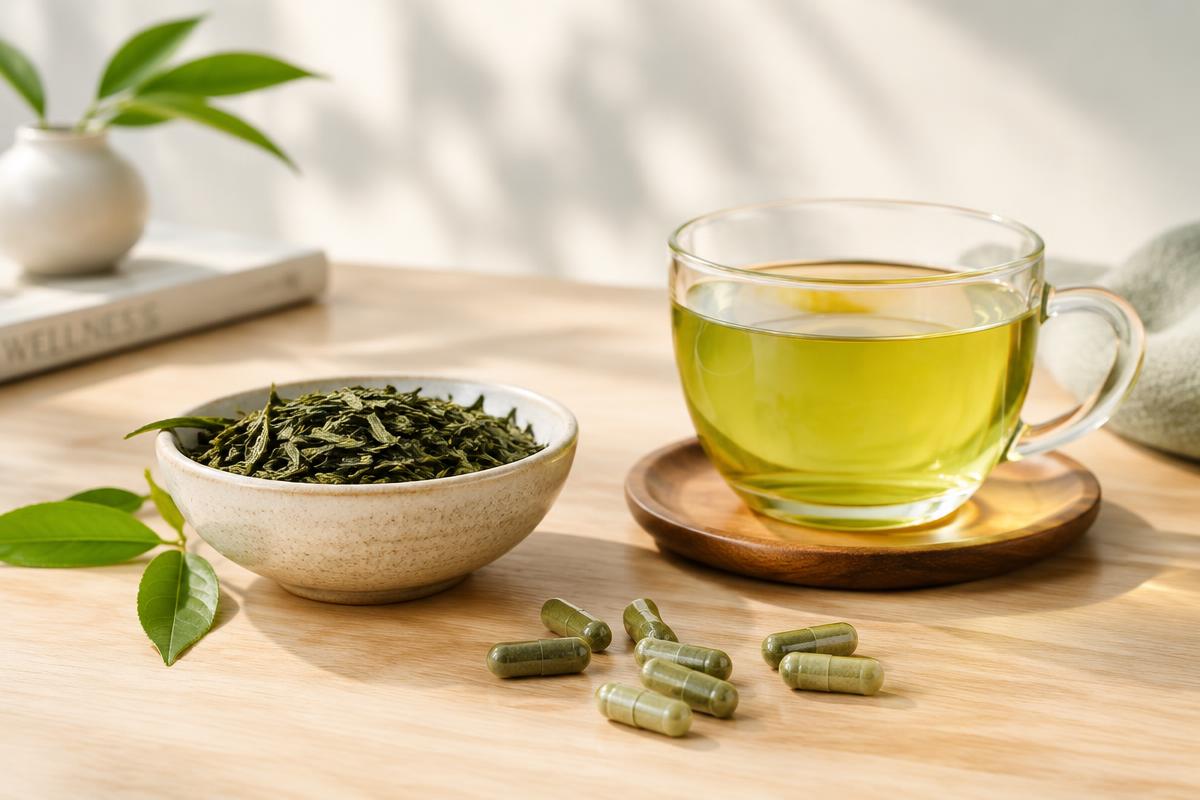
Green tea extract is concentrated from the leaves of Camellia sinensis. Its key compounds are catechins — EGCG is the main one — plus a small amount of naturally occurring caffeine. Fat burner formulas usually pair it with extra caffeine or other stimulants.
Does green tea extract help with weight management?
Reviews of controlled studies have found that green tea catechins combined with caffeine produce a small increase in energy expenditure and modest average weight changes over several weeks. The effect varies between people and tends to be smaller in habitual heavy caffeine users. It is a supporting ingredient, not a stand-alone solution.
| Question | Honest answer |
|---|---|
| Main active compound | EGCG (a catechin) plus some caffeine |
| Likely benefit | Small support for energy use alongside diet and training |
| Best time | Morning or early afternoon, with food |
| Main caution | High-dose EGCG on an empty stomach has been linked to liver strain |
How much is sensible?
Follow your product label. The European Food Safety Authority reviewed green tea catechin safety in 2018 and noted liver-enzyme concerns at intakes of 800 mg EGCG per day or more from supplements. Choose products that disclose the extract amount, take them with a meal, and do not stack several green tea products.
Who should be cautious
- Anyone with liver conditions, or who drinks alcohol heavily
- People sensitive to caffeine or with heart rhythm or blood pressure problems
- Anyone taking blood thinners, beta blockers or other prescription medication — ask your doctor
- Anyone pregnant, breastfeeding or under 18
Sources & editorial notes
This guide is written by VitoAid, which sells the products featured. Nutrient references explain established nutritional roles, not clinical results for any finished formula.
- NCCIH — Green Tea
Research overview and safety notes on green tea extract.
- NIH ODS — Dietary Supplements for Weight Loss
Evidence summaries for caffeine, green tea, raspberry ketone, carnitine and other weight-management ingredients.
- VitoAid — Vito Burn
Current label, directions and offers.
Frequently asked questions
Is green tea a good fat burner?
Green tea extract has small, measurable effects in studies, mostly when combined with caffeine. It supports a diet and activity plan rather than burning fat on its own.
When should I take a green tea fat burner?
Most people take it in the morning or early afternoon with food. Taking it with a meal is gentler on the stomach and liver, and avoiding late doses protects sleep.
Is green tea extract safe for the liver?
At label amounts with food it is generally well tolerated by healthy adults. High-dose EGCG, particularly on an empty stomach, has been linked to liver problems, so stay within label directions.
Is green tea extract the same as drinking green tea?
No. Extracts are far more concentrated in catechins than brewed tea, which is why label amounts and taking them with food matter more.

