
Hair, Skin & Nails
Biotin Gummies for Hair Growth: How Much You Actually Need
5,000 mcg, 10,000 mcg, 20,000 mcg — biotin numbers keep climbing on labels. Here is what the amount means, where the ceiling of usefulness sits, and the one safety note nobody prints.
By The VitoAid Wellness Team · September 19, 2026 · 7 min read
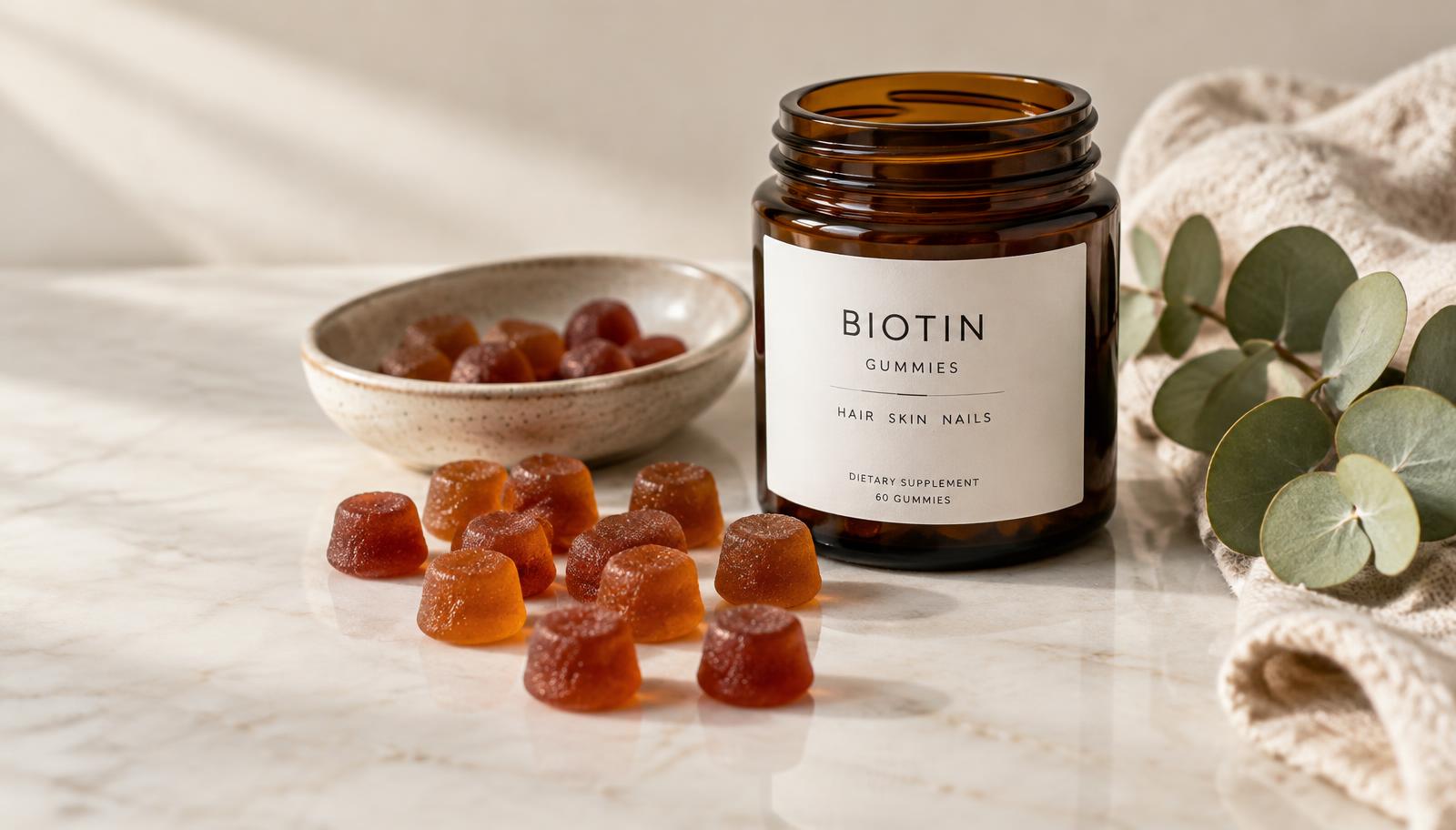
Biotin is the ingredient that built the hair gummy category. It is also the ingredient most often used to make a cheap formula look impressive: a huge number on the front of the jar costs the manufacturer very little. Understanding what biotin does — and where extra stops helping — is the fastest way to stop overpaying for the wrong bottle.
What biotin does
Biotin, or vitamin B7, is a coenzyme in the metabolism of fats, carbohydrates and amino acids. Those amino acids are what your body assembles into keratin, the structural protein in hair and nails. Biotin contributes to the maintenance of normal hair and normal skin. True deficiency is rare in people eating a varied diet, but marginal intake is more common in restricted diets, after prolonged antibiotic use, in pregnancy, and in people with certain digestive conditions — and that is where supplementing tends to show.
How much biotin is enough
- The adequate intake for adults is around 30 mcg per day — food alone usually covers this.
- Most quality hair gummies supply 2,500–5,000 mcg per serving, a generous margin above that.
- There is no established benefit to doses in the tens of thousands of micrograms; biotin is water soluble and the excess is excreted.
- A bigger number on the label is a marketing decision far more often than a formulation one.
Why biotin alone rarely fixes hair
If biotin is not what you are short of, more biotin changes nothing. Shedding is much more frequently linked with low iron, low vitamin D, low zinc, low B12 or simply not eating enough protein. That is why a broad formula outperforms a single-ingredient one for most people: it covers the likelier gaps instead of betting everything on one nutrient. A biotin-only gummy is the cheapest product to manufacture in the category — which is precisely why so many exist.
Gummies or capsules for biotin?
Biotin is stable and easy to deliver in either format, so the decision comes down to adherence and sugar. Capsules carry no sugar and cost less per serving; gummies get taken. Since hair responds on a three-to-six month timescale, the format you actually finish four bottles of is the one that works. If you choose gummies, keep sugar under roughly 3 g per serving so the habit is not a daily dessert.
Who should be careful
- Anyone scheduled for thyroid, hormone or cardiac blood tests — mention your biotin intake.
- People already taking a multivitamin, prenatal or B-complex; check the totals before stacking.
- Pregnant or nursing women and anyone on prescription medication — speak to your doctor first.
- Anyone with sudden, patchy or rapid hair loss — get the cause diagnosed before supplementing.
Frequently asked questions
How much biotin should I take for hair growth?
Most hair supplements provide 2,500–5,000 mcg per day, well above the roughly 30 mcg adequate intake for adults. There is no established benefit to far higher doses, since biotin is water soluble and the excess is excreted.
Can biotin gummies affect blood tests?
Yes. High-dose biotin can interfere with certain laboratory immunoassays, including thyroid and cardiac tests. Tell your doctor you take biotin and follow their advice about pausing it before blood work.
How long does biotin take to work on hair?
Nails often look stronger within 6–8 weeks. Hair changes take longer — typically 3–6 months — because hair grows around half an inch per month.
Is biotin alone enough for hair growth?
Usually not. Shedding is more often linked with low iron, vitamin D, zinc, B12 or insufficient protein. A broader formula covers more of the likely gaps than biotin on its own.
This article is for general information only and is not medical advice. *These statements have not been evaluated by the Food and Drug Administration. These products are not intended to diagnose, treat, cure or prevent any disease. Talk to your doctor before starting a new supplement.


